Build a Safe Sulfur Cube Bounce Course in Minecraft Chaos Cubed
The first time I found a Sulfur Cube, I treated it like a strange cave mob. That was the wrong mindset. The Sulfur Cube is much more interesting when you treat it like a moving redstone component with a personality: feed it a block, push it, watch how its movement changes, then reset it and try a different setup.
My favorite use so far is a compact Sulfur Cube bounce course. It is small enough to build near a cave entrance, safe enough for survival worlds, and flexible enough to become a repeatable multiplayer challenge. The goal is simple: launch the cube through a short lane, hit score gates, reset it quickly, and try again with a different absorbed block.
This guide focuses on one experience only: building a controlled mini-game arena for the Sulfur Cube without letting the new Chaos Cubed mechanics wreck your base.
The core idea
Chaos Cubed adds the Sulfur Cube, a mob that can absorb blocks and change how it behaves. Once it has absorbed a block, it stops acting like a normal wandering mob and becomes a physical object that players can push and punch around. That makes it perfect for a small skill course.
The trick is not to start big. A giant stadium looks impressive, but it also gives the cube too much room to escape, bounce unpredictably, or roll into an area you did not prepare. A good first course should be boring in shape and interesting in behavior.
Build three zones:
- A feed bay where you give the cube a test block.
- A test lane where you push or punch it toward targets.
- A reset bay where you remove the absorbed block, bucket the cube if needed, and prepare the next run.
What to bring
For a clean first build, prepare these items before you move the cube:
- Solid building blocks for the floor and walls.
- Walls, fences, or full blocks for a two-block-high boundary.
- Torches, lanterns, or glowstone for visibility.
- Shears for removing the absorbed block from the cube.
- An empty bucket if you are working with a large Sulfur Cube.
- A few safe test blocks, such as wood, wool, stone-like blocks, icy blocks, honeycomb, or soul sand.
Do not begin with TNT or magma. They are fun later, but they are terrible first-test materials. The whole point of this build is to understand the cube’s movement before you add risk.
Step 1: Build the box before moving the cube
Make the arena first. I recommend an inner space around 11 blocks wide and 17 blocks long, with the test lane running through the middle. The walls should be at least two blocks high, and the corners should be closed with full blocks rather than fence gaps.
Put the feed bay at one end and the reset bay at the other. Leave yourself a small observation deck on the side, one block higher than the floor. This lets you watch the cube without standing directly in its path.
The floor should be simple. Avoid stairs, trapdoors, open holes, and decorative gaps until the course is working. A flat floor makes the cube’s behavior easier to read.
Step 2: Use safe blocks to learn the physics
Start with blocks that create obvious movement differences without making the arena dangerous.
Wooden blocks are a good first choice because they give the cube a lively, bouncy feel. Wool is useful when you want a lighter, floatier run. Icy blocks are excellent for a slide-focused lane. Honeycomb works well as a brake because the cube becomes sticky and loses that runaway feeling. Soul sand or soul soil can slow the whole experiment down when you want more control.
The point is not to memorize every possible block interaction immediately. The point is to build a testing loop where each attempt teaches you something:
Feed the cube. Push it once. Watch the path. Reset it. Try another block.
That loop is what turns the Sulfur Cube from chaos into a playable mechanic.
Step 3: Add simple score gates
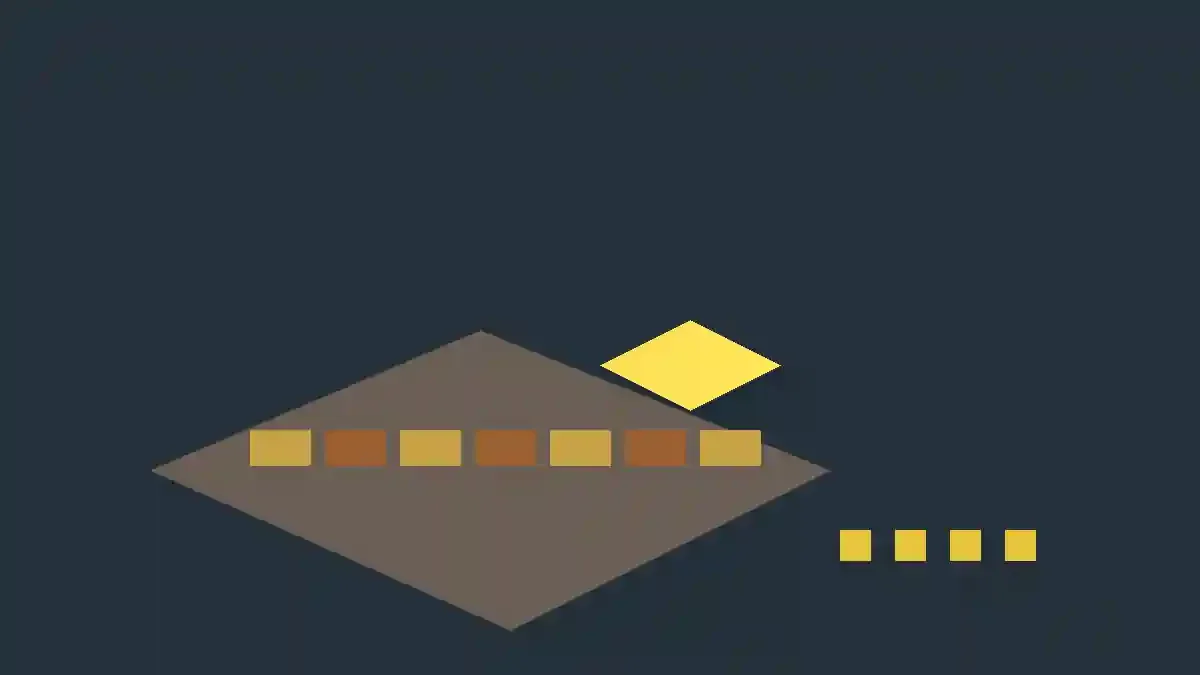
Once the cube can move from one end of the lane to the other, add score gates. Keep them low-tech at first. Four colored blocks on the ground are enough.
Try this scoring rule:
- First gate: 1 point.
- Second gate: 2 points.
- Third gate: 3 points.
- Final gate: 5 points.
A run only counts if the cube stays inside the arena. If it jumps over a wall, gets stuck in the feed bay, or enters the reset bay too early, the player scores zero and has to reset.
For multiplayer, give each player three attempts per block type. That creates a short, clean challenge without needing complicated redstone.
Step 4: Make resetting fast
The reset bay is the part most players forget, and it is the reason many Sulfur Cube experiments become annoying.
Place a chest in the reset bay with shears, spare test blocks, and buckets. After each run, use shears to remove the absorbed block and return the cube to a normal state. If you are moving a large cube between areas, keep an empty bucket ready so you do not have to push it across half the cave.
A fast reset makes the course feel like a real mini-game instead of a one-time physics accident.
Mistakes to avoid
The biggest mistake is building the arena too close to storage, farms, villagers, or important redstone. Even if your first tests are safe, later experiments with sliding, bouncing, hot, or explosive behavior can get messy quickly.
The second mistake is using decorative terrain too early. Sulfur caves look great, and cinnabar and sulfur blocks fit the theme perfectly, but the test lane should remain readable. Add decoration after the movement feels predictable.
The third mistake is testing TNT before you have a sealed blast area. TNT-absorbed cubes can create memorable moments, but they do not belong in the first version of the course. Build a separate blast chamber if you want that kind of round.
Why this course works
The arena works because it respects the Sulfur Cube’s best feature: changing motion. Instead of trying to control every detail, the build gives the cube a safe space to be unpredictable. That balance is what makes the new mob fun.
In survival, the course gives you a reason to revisit sulfur caves beyond gathering blocks. In multiplayer, it becomes a fast party game. In creative, it is a test bench for bigger ideas like cube football, sliding race lanes, geyser launches, or redstone-triggered challenge rooms.
My advice is to keep the first version ugly and functional. Once the loop feels good, then dress it up with polished cinnabar, sulfur bricks, spikes, lighting, spectator seats, and a proper scoreboard.
The Sulfur Cube is not just another cave creature. Give it a lane, give it a reset bay, and it becomes one of the most replayable toys in Chaos Cubed.